

The dragon of William Fife yachts: history and symbol of classic yachting
The dragon of William Fife yachts is today one of the most recognisable symbols of classic yachting.
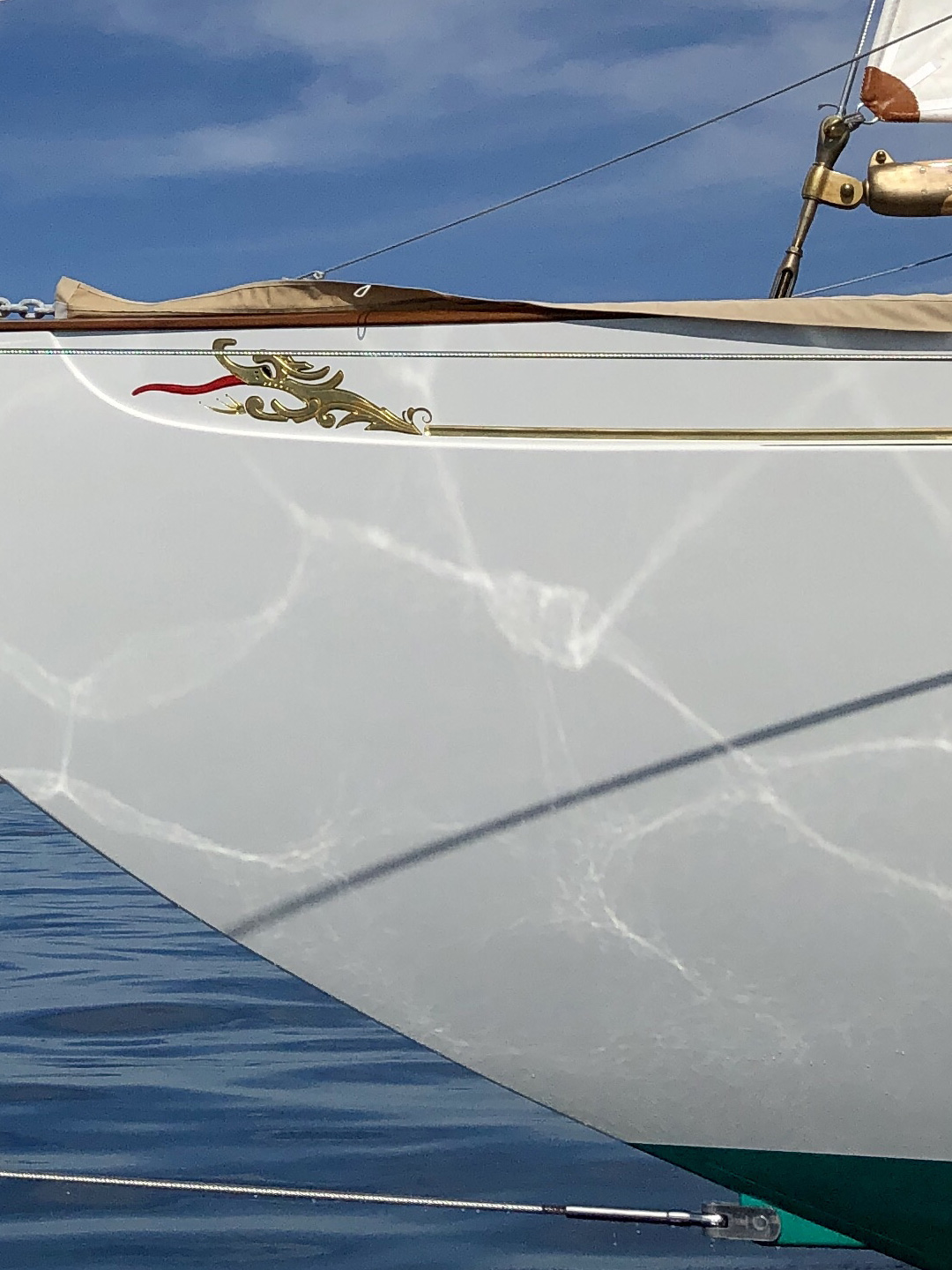
On many classic yachts designed by William Fife III, one detail immediately catches the eye: a finely carved, often gilded dragon adorning the bow.
More than a decorative element, this dragon gradually became the signature of the Fairlie shipyard in Scotland. It embodies the elegance, performance and excellence that have defined Fife yachts since the late 19th century.
Built in 1914, Sumurun proudly bears this emblem, a direct legacy of one of the greatest naval architects in the history of classic yachting.
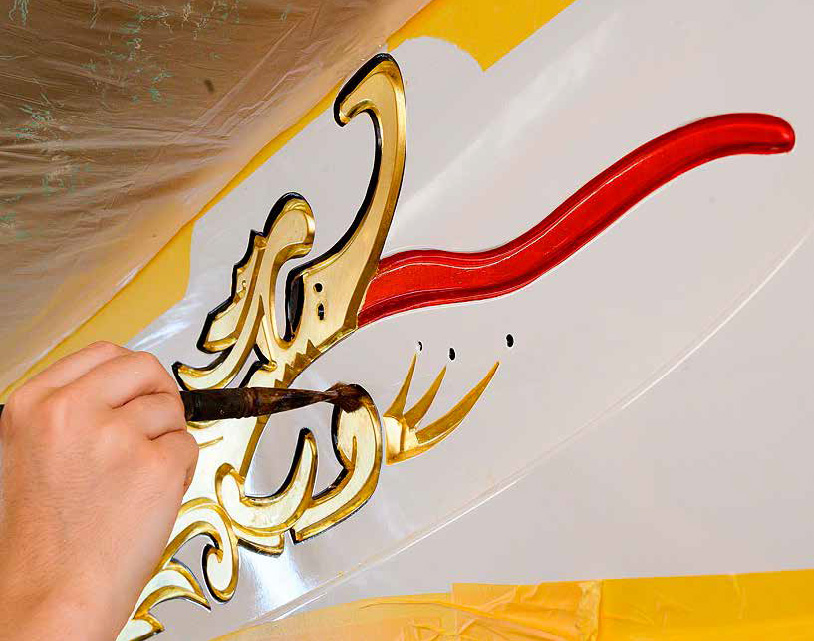
Gilding of Sumurun’s dragon during restoration
Le Chantier du Guip – 2019
William Fife and the Fairlie shipyard
The story of the dragon is inseparable from that of William Fife III and his shipyard in Fairlie, on the west coast of Scotland.
Over three generations, the Fife family distinguished itself as naval architects and boatbuilders, contributing to the golden age of yachting between the late 19th and early 20th centuries. At their yard on the Firth of Clyde, nearly one thousand yachts were designed and built, ranging from pleasure boats to some of the most competitive racing yachts of their time.
The designs of William Fife III are still celebrated today for:
- the balance of their lines
- the refinement of their hulls
- their racing performance
- and their timeless elegance
It is within this context of excellence that the dragon symbol emerged.
The origin of the Fife dragon
The dragon gradually became the emblem of the Fife shipyard in the late 19th century.
One commonly accepted explanation links it to the success of a yacht named Dragon, designed by William Fife. Following this success, the shipyard adopted a stylised dragon as its distinctive mark, featured on its yachts.
Beyond its origin, the dragon carries strong symbolism:
- power and speed, essential qualities for yachts, especially in racing
- prestige, associated with exceptional vessels
- a mythological dimension, echoing European maritime traditions
Some also see in it a reference to the carved figureheads of ancient ships, particularly the dragon-prowed Viking vessels that remain deeply rooted in maritime imagination.
The dragon of William Fife yachts, a symbol recognised in classic regattas
Over time, the dragon has become far more than an ornament.
In classic regattas, it is now instantly recognisable and serves as both a visual signature, a mark of quality and a historical reference within fleets of classic yachts.
At prestigious events such as Les Voiles de Saint-Tropez or the Cannes regattas, these yachts stand out not only for their lines, but also for this emblematic detail.
The dragon on Sumurun
Built in 1914 by William Fife III, Sumurun proudly carries this dragon, a testament to her origin and her place within this prestigious lineage.
More than a century after her launch, Sumurun still sails today and continues to take part in classic regattas in the Mediterranean.
The dragon at her bow is a constant reminder of her heritage, authenticity and the craftsmanship from which she was born.
It is not merely a decorative feature, but a strong anchor in the history of classic yachting.

The dragon of William Fife yachts is far more than a decorative symbol.
It represents:
- an exceptional shipyard
- a golden age of yachting
- a living maritime tradition
- and a level of excellence rarely matched
Through Sumurun, this symbol still sails today, perpetuating the legacy of William Fife and offering a unique experience to those who step aboard.
Learn more about the history of Sumurun
Practical information & booking
Sumurun is available for weekly charter, tailor-made cruises and classic regattas, mainly in the Mediterranean.
Rates are available upon request, depending on the period, options and sailing programme.
👉 To discover available experiences, check availability or request a personalised quote, please [contact us] or visit our dedicated charter page.